When Login Is Not Enough
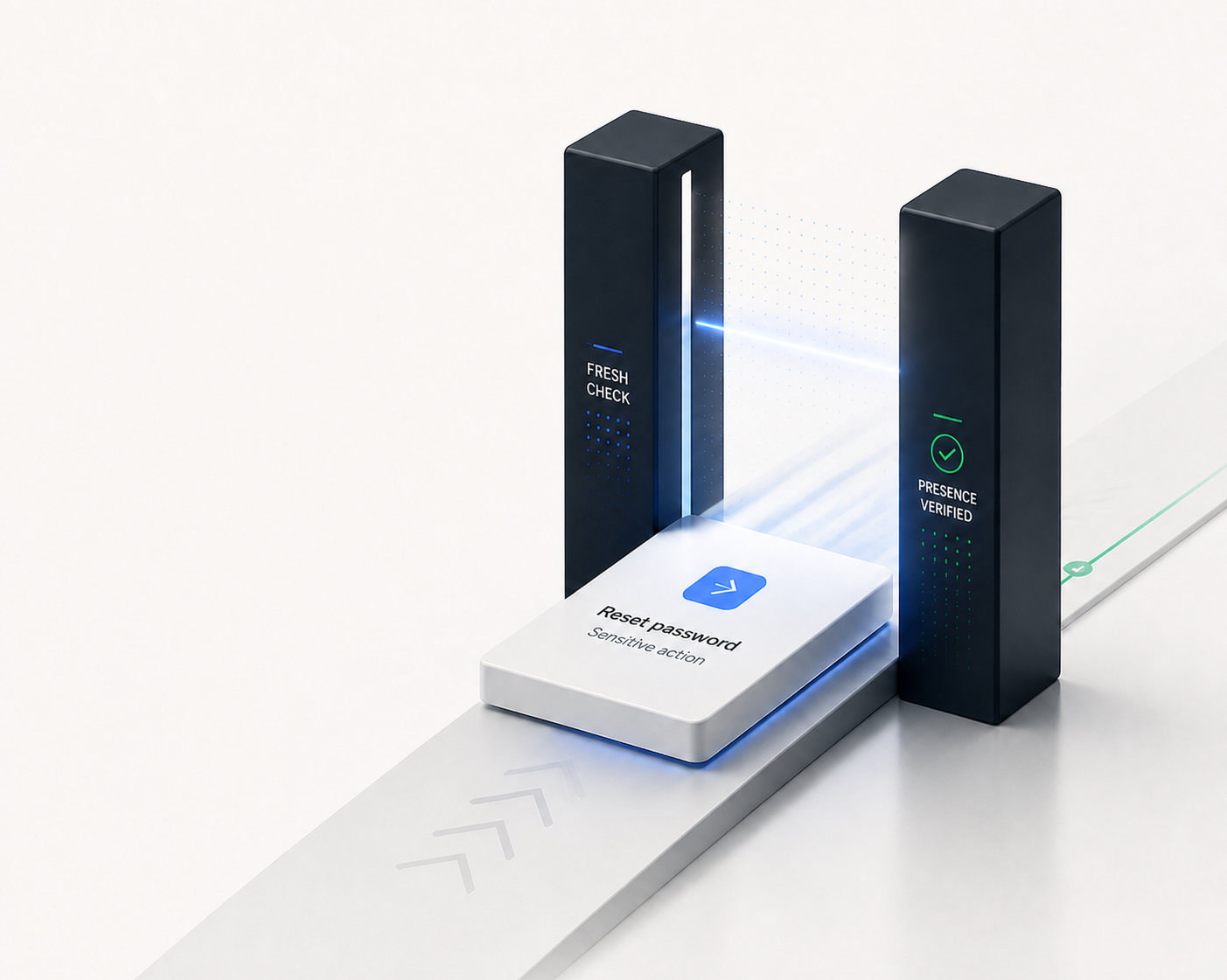
Some actions are too sensitive to trust to a standing session alone. JEM adds a fresh presence check for the handful of actions that become dangerous when a valid session is in the wrong hands.
JEM does not replace login, MFA, SSO, or the rest of your auth stack. It adds a sharper control for the moments where "already logged in" should not be enough.
The problem
MFA is necessary, but it does not solve the problem once a session is already trusted.
A valid session can still be the wrong person. That matters most when the action is irreversible, high-risk, or hard to unwind.
Once someone is in, a standing session can keep carrying trust forward longer than it should.
The right question is "is the right person present right now for this specific step?"
Where this matters
This is a focused control for narrow, high-value moments. It is not a separate industry page.
For teams handling resets, unlocks, and recovery steps that should not happen on trust alone.
For changes that are low-frequency, high-impact, and too easy to approve from a stale session.
For legal, healthcare, and financial cases where the session is valid but the action still needs a fresh check.
How it works
Keep the existing auth stack. Identify a small set of sensitive actions. Require a fresh JEM presence check before action completes.
Simple control, narrow scope
JEM sits alongside your current auth setup. It does not replace or interfere with it.
Pick the small set of actions that should not run on standing trust alone.
Require a fresh presence check before those actions are allowed to finish.
Keep your current login, SSO, MFA, and approval flow.
JEM is not a replacement for login. It is a sharper control for the moments where login alone is not enough.
Example actions
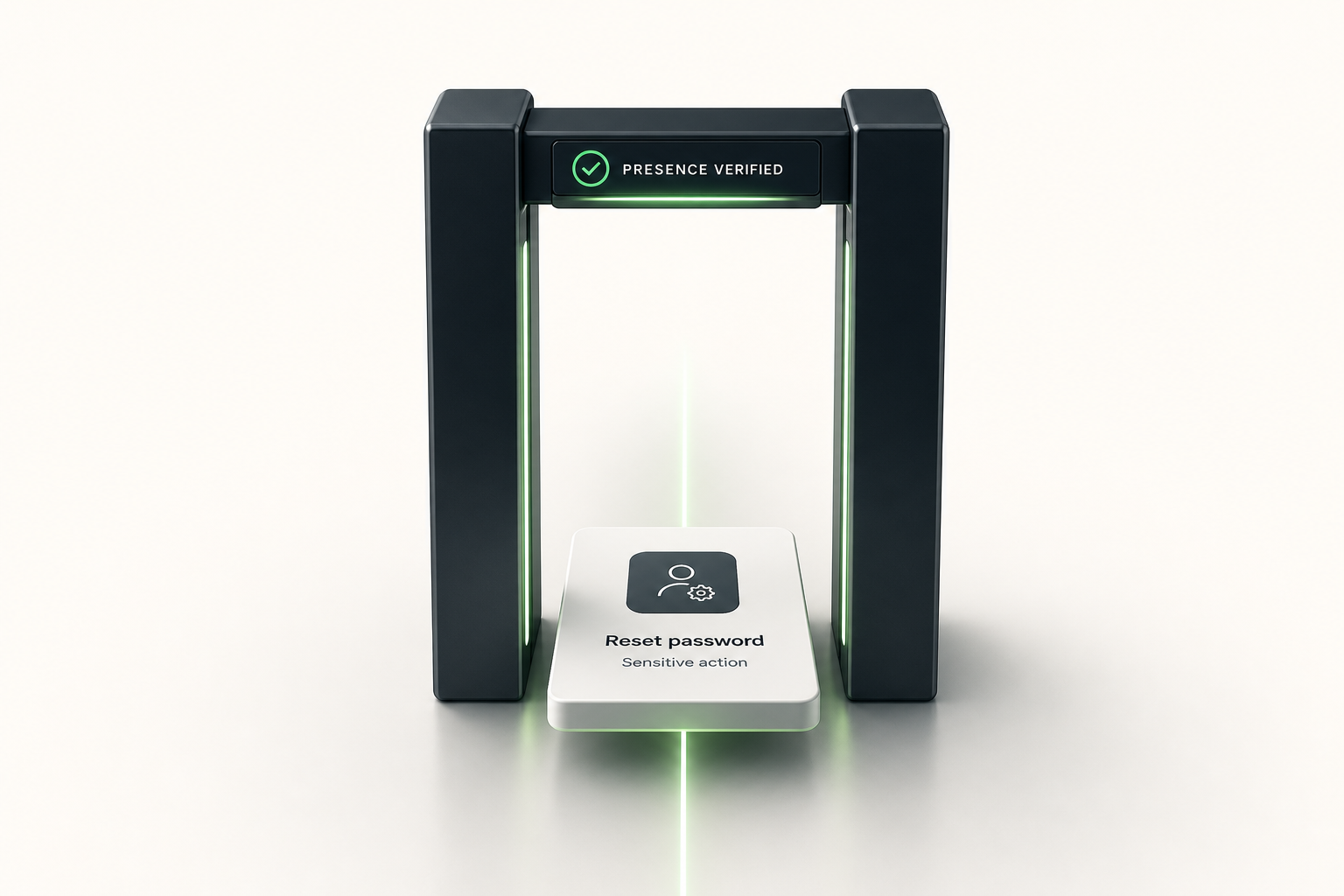
These are the kinds of actions that often deserve a fresh presence check before they complete.
A reset changes access immediately. That is one of the clearest places to ask for a fresh presence check before the change goes through.
Turning off a second factor can remove the last real barrier on an account. JEM can require the person to be present again first.
Backup codes are recovery keys. Releasing them should feel different from ordinary session activity because the impact is different.
If staff can act as another user or customer, the bar should be higher than a session token that was already accepted earlier.
The most sensitive support and admin actions deserve a quick presence check before they complete, especially when the result is hard to unwind.
Talk to us if you have sensitive actions that need fresh presence verification.
We are especially interested in teams who can name 3-5 actions they do not want to trust to a standing session alone.
Start the conversation